Film Restoration Case Studies Framework
An educational blueprint detailing how professional moving image restorations are scientifically documented, peer-reviewed, and published inside the global archival community.
Accuracy Constraint Disclaimer
Details on this page are limited to independently verified facts. [Site owner]: expand with researched specifics before publishing further.
Structure of an Archival Case Study
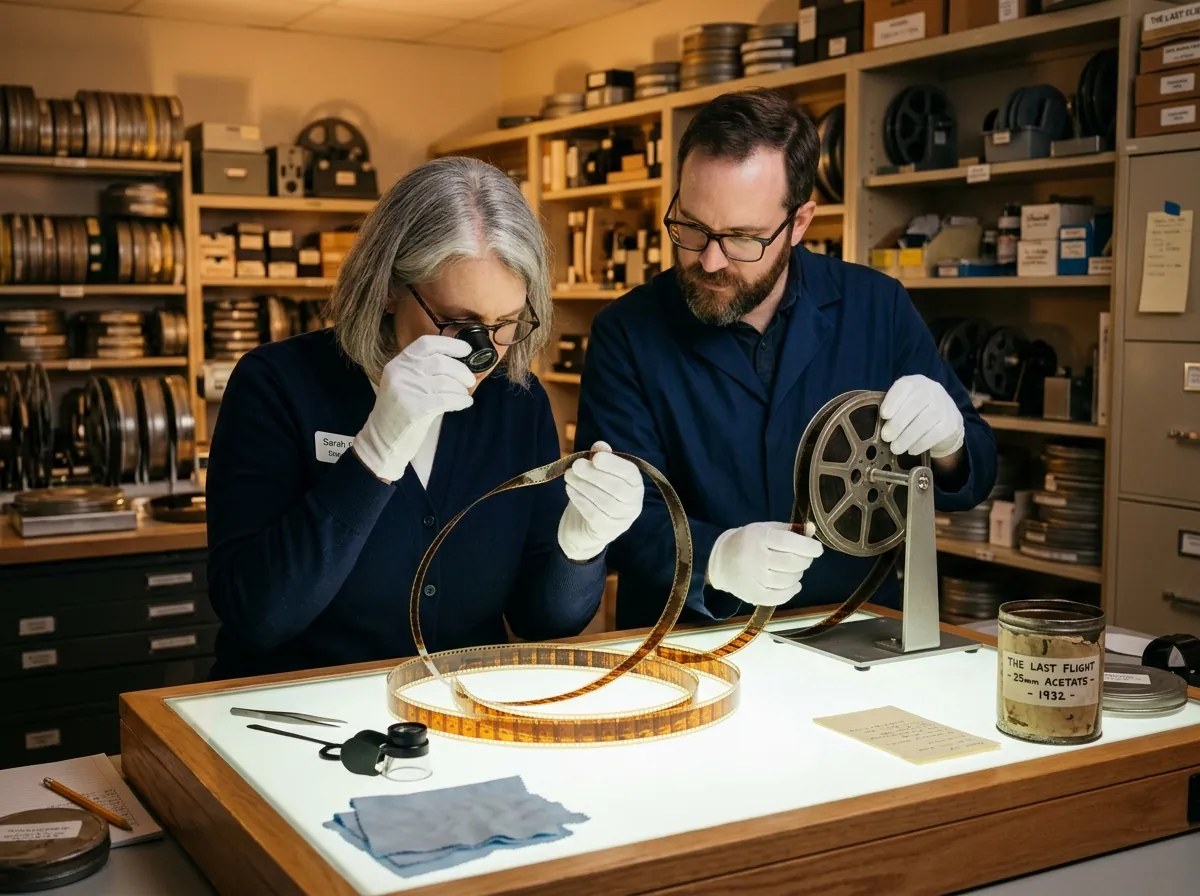
A formal restoration case study serves as a permanent record of the technical choices made during a film's rescue. It allows other preservationists to evaluate the chemical stability and historical integrity of the resulting masters. A standard, peer-reviewed case study contains four core pillars:
1. Sourcing and Physical Elements Assessment
The study details all surviving film rolls located globally (original camera negatives, interpositives, or distribution prints). It documents physical decay metrics, such as shrinkage percentage, vinegar syndrome level, emulsion mold, and perforation damage.
2. Pre-Scan Chemical and Mechanical Preparation
Documents the labor intensive preparation steps, including hand-splicing broken edits, reconstructing torn sprockets, manual chemical cleaning, and ultrasonic cleaning parameters used to stabilize the material prior to scanning.
3. Optical Scanning & Liquid Wet Gate Configuration
Describes the specific scanning gear (e.g., continuous-motion capstan scanner), scanning spatial resolution (2K/4K/8K), and whether a liquid wet gate was utilized. It tracks the specific chemical index-matching fluid used to optically neutralize physical scratches during capture.
4. Digital Restoration, Grading, and Mastering Parameters
Documents the software workflows, including flicker correction, image stabilization thresholds, digital regrading color spaces (e.g., ACES), and the file formats exported for archival preservation (e.g., uncompressed DPX) and commercial release.
Why Unattributed Frameworks Matter
In order to protect technical accuracy, liquifilm.com does not publish invented or unverified claims about specific corporate restoration projects. This framework is designed to provide a pristine, standardized template ready to accept authentic, meticulously researched case reports in future updates as they are verified independently by archival authorities.